

Great mentors aren't born. They're trained.
Foundations of Mentorship teaches you the coaching skills that turn good intentions into real growth — for the teachers you support, and for you.
Self-paced · Entirely online · Certificate upon completion
One response solves today's problem. The other builds a teacher who can solve tomorrow's.
You know how to teach. Mentoring is a different skill.
Most mentors default to what feels natural: giving advice. And advice feels helpful — until you notice your mentee nodding along, implementing nothing, and coming back with the same problem next month.
Effective mentorship isn't about having answers. It's about facilitating the kind of reflective conversation that helps another educator think better, see clearly, and commit to their own next step.
That's a learnable, practicable skill set — and almost nobody teaches it. This course does.
A complete coaching skill set, built for educators
At the center of the course: five concrete coaching moves, each taught, demonstrated, and practiced until it becomes second nature.
Reach & Reveal — coach the person, not the problem
Learn to shift conversations from external circumstances to the person in front of you — their patterns, their thinking, their stake in the situation. The problem is rarely the problem.
Reflect & Repeat — create insight by reflecting back
Master reflective statements — recapping, paraphrasing, encapsulating — so your mentee hears their own thinking clearly, often for the first time. Statements do as much work as questions.
Surface the Root — uncover the beliefs underneath
Develop the skill of helping a mentee discover their own limiting beliefs — without triggering defensiveness. Behavior changes when the belief driving it becomes visible.
Frame & Follow — keep the conversation productive
Learn to clarify what a conversation is for, hold that focus without controlling it, and know when following a tangent serves the mentee — and when it's just wandering.
Anchor & Aim — turn insight into commitment
Help your mentee articulate their own insight — in their own words — and commit to a concrete next step. Insight they name themselves is insight that sticks.
The Three Mental Habits
The internal work that makes the practices land: genuine presence, receiving rather than just listening, and catching judgment before it shapes the conversation.
Conversation Architecture
How coaching conversations are structured — the arc from opening to commitment, six types of questions and when to use each, and transforming stuck "rut stories."
Trust, Safety & Hard Moments
What to do when a mentee cries, pushes back, or shuts down. Boundaries, repair, and knowing when to coach, advise, direct — or refer.
The Mentor as Learner
Honest self-assessment, bias and trigger awareness, and a personal mentorship philosophy that keeps you growing long after the course ends.
Built like nothing else in music education PD
Every module pairs short videos like this with hands-on practice — you'll never just watch.
Finish certified. Get found.
Complete the course and earn your Foundations of Mentorship certificate — proof of a coaching skill set most educators never get formal training in.
A verified digital credential you can share on LinkedIn, your résumé, or your studio website — with verification built in.
Eligibility for the MTG mentor directory, where music educators seeking mentorship can find certified mentors and connect directly.
Every module. Every lesson. No mystery.
107 lessons, activities, simulations, and assessments — here's exactly what you're enrolling in.
- Course Introduction: Setting Yourself Up for Success
- Best Practices for Achievement in Self-Paced Learning
- Support
- Module Introduction
- The Advice Trap Reflection
- The Neuroscience of Insight
- Reading: The Neuroscience of Insight
- Practice SIM: Cognitive Disruption MatchingSIM
- Role Clarity
- Sample Coaching Agreements
- Crazy Coaching Beliefs Inventory
- When to Coach vs. When to Direct
- SIM Instructions: When to Coach vs. DirectSIM
- Coaching Continuum Scenarios
- SIM: When to Coach vs. DirectSIM
- Coaching Foundations Simulator WorksheetSIM
- SIM: Coaching Foundations SimulatorSIM
- Coaching Foundations Simulator Score SubmissionAssessment
- Assessment: Written ReflectionAssessment
- Written Reflection Score SubmissionAssessment
- Module Introduction
- Practice 1 — Reach & Reveal: Shifting from Problem to Person
- Practice 2 — Reflect & Repeat: Reflective Statements
- Practice 3 — Surface the Root: Discovering Beliefs
- Practice 4 — Frame & Follow: Maintaining Focus
- Practice 5 — Anchor & Aim: Facilitating Insight and Commitment
- SIM: Coaching Lab — Integrated SkillsSIM
- Voice-Based Coaching LabSIM
- Voice-Based Coaching Lab AssessmentAssessment
- Assessment 2 Instructions: Video DemonstrationAssessment
- Assessment 2 Checklist: Video DemonstrationAssessment
- Assessment 2: Video Demonstration for ReviewAssessment
- Module Introduction
- Align Yourself: Developing a Presence Practice
- Reading: Clearing Your Mind
- Align Yourself: Ritual BuilderInteractive
- Receive, Don't Just Listen: Deep Listening Practice
- SIM: Distraction Simulation — Maintaining FocusSIM
- Detect & Drop: Judgment Awareness
- Listening Barriers Inventory
- SIM Instructions: Catch the Judgment Interactive GameSIM
- SIM: Catch the Judgment Interactive GameSIM
- Video Review: Spotting Your Own Mental Habits
- Building Your Mental Habits Practice Plan
- Assessment: Written Self-AnalysisAssessment
- Knowledge Check: Live JudgementAssessment
- Module Introduction
- Mapping the Arc of Conversation
- Conversation Arc VisualizerInteractive
- Question Stems Toolkit
- Build Your Question Stems ToolkitInteractive
- Zone of Proximal Development in Mentoring
- ZPD Guide
- River Stories vs. Rut Stories
- River vs. Rut SorterInteractive
- Feedback That Invites Reflection
- Spot the Verdict ActivityInteractive
- Feedback That WorksInteractive
- Storytelling and Role Play
- Build the Story: A Stacking InteractiveInteractive
- Direct the Scene: A Role Play Practice SessionInteractive
- Conversation BuilderInteractive
- Rapid-Fire Questions: Test Your Conversation SkillInteractive
- SIM: Role Play Practice LabSIM
- Assessment 4A Instructions: Conversation Structure SIMAssessment
- Assessment 4A: Submit Your Completion CodeAssessment
- Assessment 4B Instructions: One-Sheet Guide or InfographicAssessment
- Assessment 4B SubmissionAssessment
- Module Introduction
- The Foundations of Psychological Safety
- Psychological Safety Audit InteractiveInteractive
- Interactive Lesson: Understanding Psychological SafetyInteractive
- Navigating Difficult Emotions
- Response Analysis Interactive LessonInteractive
- Boundaries and Professional Limits
- Boundary ScenariosInteractive
- Resistance and Repair
- Practice: Nothing WorksSIM
- Practice: Last Time You Said SomethingSIM
- Case Study Analysis
- Trust Meter InstructionsSIM
- The Trust Meter: Real-Time Relationship DynamicsSIM
- Assessment 5: High-Emotion Scenarios SimulationAssessment
- Assessment 5 Submission: High-Emotion ScenariosAssessment
- Module Introduction
- Instructions: Learning Journal Synthesis
- Learning Journal Synthesis ToolInteractive
- Feedback Integration Review
- Feedback Integration ToolInteractive
- Bias and Trigger Inventory
- Bias and Trigger Inventory ToolInteractive
- Video Self-Critique
- Video Self-Critique ToolInteractive
- Mentorship Philosophy Statement
- Sample Mentorship Philosophy Statements
- Philosophy Statement BuilderInteractive
- SIM Introduction: Implicit Bias SimulationSIM
- SIM: Implicit Bias SimulationSIM
- Creating Your Growth Plan
- Assessment 6A: Reflective Portfolio WalkthroughAssessment
- Assessment 6A Submission: Reflective PortfolioAssessment
- Assessment 6B: Course Completion SurveyAssessment
- Course Completion: Let's Wrap This Up!
- Further Reading
- Extension Courses
- Podcasts & Videos
- Credits
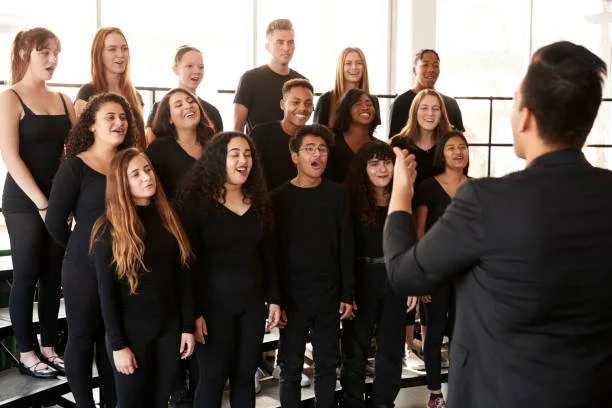 Built for music educators
 Self-paced, online
Built for educators who support other educators
Experienced teachers who mentor student teachers or early-career colleagues
District and building mentors assigned to new music staff
Private studio teachers guiding newer studio professionals
Department chairs, lead teachers, and instructional coaches
Anyone who keeps finding themselves in the "wise colleague" role — and wants to be genuinely good at it
Create the mentors you wish you'd had.
There's more to program success than assigning mentors. Foundations of Mentorship builds a corps of trained coaches inside your own program — colleagues equipped to give teachers targeted, one-on-one support in the moments that decide whether they stay.
Move your leadership team, department chairs, or entire faculty through the course together — building one shared coaching vocabulary across your whole building.
Every student teacher deserves a placement with a trained mentor. Prepare cooperating teachers before placements begin — and make your program the one candidates request.
Self-paced means no waiting for summer. A mid-October mentor assignment, a struggling first-year hire, a sudden leadership vacancy — the training starts the day you need it.
This is program improvement at the root.
Complete the form to request your custom quote.
Ready to become the mentor they'll remember?
One price. Everything included. Start today.
The complete course — every module, all 100+ lessons and activities
All 16 AI practice simulators with real-time coaching feedback
Every pass-or-revise skill assessment — revise until you've truly got it
Your certificate upon completion — a verified, shareable digital credential
MTG mentor directory eligibility — where educators seeking mentors can find you
Secure checkout · Instant access after enrollment
Enrolling a team? See institutional options with bulk pricing ↑
Everything else you're wondering
The course is fully self-paced — you can move as quickly or as gradually as your schedule allows. Plan for a substantive professional development experience: each module includes multiple activities, practice simulations, and assessments, not just videos to watch.
The moment you enroll. There are no cohorts, start dates, or waiting periods — you get instant access to everything and begin whenever you're ready.
Just a device with internet access and a ChatGPT account (a free account works) — the AI practice simulators run through ChatGPT. Everything else runs right in your browser, with no downloads or special software.
No grades — the course uses a pass-or-revise model, and you'll always know the performance criteria before each assessment. When you complete an assessment, you'll receive a score to submit into the course platform; if it doesn't meet the standard, you revise and resubmit until it does. Your final submission is a digital portfolio of your work across the course.
A verified digital certificate in Foundations of Mentorship — shareable on LinkedIn, your résumé, or your studio website — plus eligibility for listing in the MTG mentor directory, where music educators seeking mentorship can find you.
Yes. The coaching practices are universal — they're simply taught through scenarios music educators will recognize. Mentors and coaches in any educational setting will find the skills directly applicable.
Absolutely. Per-seat institutional pricing is available with bulk discounts, group completion tracking, and a dedicated team community. See the institutional options above and use the inquiry form to get pricing for your group.
Email us at hello@musicteacherguild.org — we're happy to help.
The teachers you mentor deserve more than good advice.
They deserve someone trained to help them think, grow, and stay in the profession. Become that mentor.
Foundations of Mentorship was created by Dr. Elisa Janson Jones, Sovereign+.
Offered by the Music Teacher Guild, a 501(c)(3) nonprofit advancing music education through individualized, innovative, and inclusive professional development. Individualized. Innovative. Inclusive.